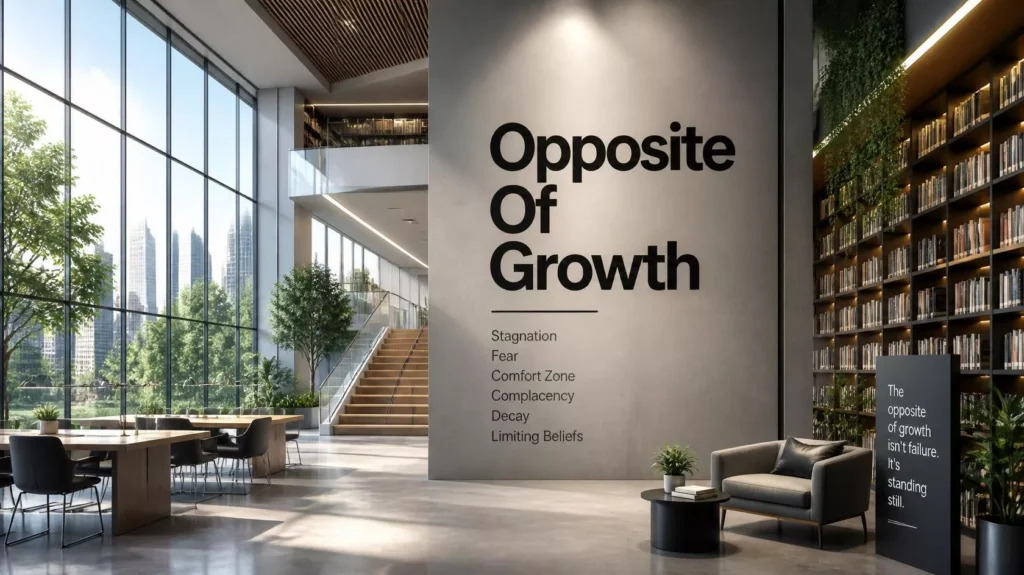
Growth is often associated with progress, expansion, and positive change, whether in personal development, business, education, nature, or the economy. However, not every situation follows an upward path. When something decreases, weakens, or stops progressing, the opposite of growth becomes the more accurate way to describe it. Understanding the antonyms of growth helps express ideas of decline, reduction, stagnation, or deterioration with greater precision. Depending on the context, words such as decline, shrinkage, stagnation, recession, and decay can each serve as the growth antonym, making them valuable for both everyday communication and professional writing.
Why Knowing Opposite of Growth Is Important
Understanding the growth antonym allows you to communicate more accurately in different situations. While growth represents progress and improvement, its opposite helps describe decline, stagnation, or reduction. Choosing the right antonym based on the context makes your writing and speech clearer and more meaningful. Knowing the alternative words for growth is especially useful in areas such as business, economics, education, health, and personal development. For example, a company may experience recession instead of growth, a person’s skills may fall into stagnation without continuous learning, or natural resources may suffer decay due to neglect.

Best Opposites Of Growth
- Decline – A gradual decrease or worsening.
Example: Sales showed a steady decline this year. - Decrease – To become smaller in amount or size.
Example: The population saw a decrease after the drought. - Reduction – The act of making something less.
Example: The company announced a reduction in costs. - Shrinkage – Becoming smaller in size or volume.
Example: Heat caused shrinkage in the fabric. - Deterioration – Becoming worse in quality or condition.
Example: Lack of maintenance led to deterioration of the building. - Regression – Returning to a less advanced state.
Example: The child’s skills showed regression after the illness. - Stagnation – Lack of progress or development.
Example: Economic stagnation lasted for years. - Recession – A period of economic decline.
Example: The country entered a recession. - Contraction – A reduction in size or scope.
Example: The market experienced contraction. - Loss – The disappearance or reduction of something.
Example: The company reported a financial loss. - Failure – Lack of success.
Example: Poor planning resulted in failure. - Collapse – A sudden breakdown or fall.
Example: The bridge’s collapse shocked everyone. - Decay – Gradual decomposition or decline.
Example: Moisture caused wood decay. - Withering – Drying up or weakening.
Example: The flowers were withering in the heat. - Erosion – Gradual wearing away.
Example: Coastal erosion threatened homes. - Weakening – Becoming less strong.
Example: The team’s defense showed weakening. - Diminishment – Reduction in importance or size.
Example: There was a diminishment in enthusiasm. - Downturn – A decline in business or activity.
Example: The industry faced a severe downturn. - Drop – A fall or decrease.
Example: There was a sharp drop in attendance. - Fall – A downward movement or decrease.
Example: The fall in prices benefited buyers. - Slump – A sudden decline.
Example: Housing sales entered a slump. - Setback – A delay or reversal in progress.
Example: The injury was a major setback. - Standstill – A complete stop in progress.
Example: Construction came to a standstill. - Retreat – Moving backward or withdrawing.
Example: The army began its retreat. - Retardation – Slowing of development.
Example: Pollution caused plant growth retardation. - Degeneration – Decline to a worse condition.
Example: Muscle degeneration occurs without exercise. - Impairment – Damage that reduces function.
Example: Hearing impairment affected communication. - Depletion – Using up resources.
Example: Water depletion became a concern. - Destruction – Complete ruin.
Example: The storm caused widespread destruction. - Exhaustion – Complete use or depletion.
Example: Soil exhaustion reduced crop yields. - Dwindling – Gradually becoming smaller.
Example: Their savings were dwindling. - Weakness – Lack of strength.
Example: Financial weakness hurt the company. - Disintegration – Breaking apart.
Example: The old structure showed signs of disintegration. - Degradation – Decline in quality or value.
Example: Environmental degradation harmed wildlife. - Exhaustion – Total depletion of energy or resources.
Example: Worker exhaustion reduced productivity. - Underdevelopment – Lack of sufficient progress.
Example: Rural underdevelopment limited opportunities. - Neglect – Failure to care for something.
Example: Plant neglect caused it to die. - Atrophy – Wasting away from disuse.
Example: Muscle atrophy occurred after surgery. - Shrinking – Becoming smaller.
Example: The glacier is shrinking every year. - Reductionism – Simplification by reducing complexity.
Example: Some criticized the reductionism of the study. - Dissolution – Breaking apart or ending.
Example: The partnership ended in dissolution. - Disappearance – Ceasing to exist.
Example: The species faces disappearance. - Bankruptcy – Financial collapse.
Example: The company filed for bankruptcy. - Extinction – Complete disappearance of a species.
Example: Climate change increases the risk of extinction. - Extinguishment – Being put out or ended.
Example: The extinguishment of the fire took hours. - Declension – A downward trend or decline.
Example: The report showed a declension in demand. - Abatement – A reduction in intensity.
Example: There was an abatement in pollution. - Suppression – Preventing development or expression.
Example: Fear led to the suppression of creativity. - Reversal – A change to the opposite direction.
Example: The policy marked a reversal in progress. - Inactivity – Lack of action or movement.
Example: Long periods of inactivity affected fitness.
Growth Antonyms In Different Contexts
- Recession – Economic decline.
Example: The country faced a recession. - Contraction – Reduction in economic activity.
Example: The market experienced contraction. - Downturn – A decline in performance.
Example: The tourism industry suffered a downturn. - Slump – A sharp drop in activity.
Example: Retail sales entered a slump. - Decline – General decrease in growth.
Example: Revenue was in decline. - Stagnation – No progress or improvement.
Example: Career stagnation frustrated him. - Failure – Lack of success.
Example: The project ended in failure. - Setback – An obstacle to progress.
Example: The injury was a temporary setback. - Weakening – Becoming less capable.
Example: Confidence showed weakening over time. - Withering – Drying up or dying.
Example: The crops were withering. - Decay – Gradual breakdown.
Example: The fruit showed signs of decay. - Atrophy – Wasting away due to disuse.
Example: Lack of exercise caused muscle atrophy. - Erosion – Wearing away over time.
Example: Wind caused soil erosion. - Extinction – Complete disappearance of a species.
Example: Habitat loss threatened extinction. - Decrease – Becoming smaller in amount.
Example: There was a decrease in demand. - Reduction – Making something less.
Example: The reduction in costs improved profits. - Shrinkage – Becoming smaller.
Example: Fabric shrinkage occurred after washing. - Loss – Absence or reduction of something.
Example: The team suffered a loss of talent. - Standstill – Complete halt in progress.
Example: Construction came to a standstill.
Synonyms Of Growth
| Word | Meaning |
|---|---|
| Development | The process of improving or becoming more advanced. |
| Expansion | An increase in size, number, or scope. |
| Progress | Forward movement toward a goal or improvement. |
| Advancement | Moving forward to a higher level or position. |
| Improvement | A positive change that makes something better. |
| Increase | A rise in amount, size, or number. |
| Maturation | The process of becoming mature or fully developed. |
| Evolution | Gradual development or change over time. |
| Flourishing | Growing or developing successfully. |
| Prosperity | A state of successful growth and wealth. |
Mistakes To Avoid When Using Growth Antonyms
- Using the wrong antonym for the context
Incorrect: “The plant experienced a recession.”
Correct: “The plant experienced withering.” - Confusing “stagnation” with “decline”
Stagnation means no progress.
Decline means becoming worse or decreasing. - Using economic terms in personal situations
Incorrect: “She entered a recession in her studies.”
Correct: “She experienced regression in her studies.” - Treating all antonyms as interchangeable
Words like collapse, decrease, and decay have different meanings and levels of severity. - Ignoring the degree of change
Decrease = small reduction.
Collapse = sudden and complete failure. - Using “failure” when no attempt was made
Use stagnation or lack of progress if nothing actually failed. - Confusing “loss” with “decline”
Loss refers to something being gone.
Decline refers to a gradual downward trend. - Using negative words unnecessarily
Choose the antonym that accurately reflects the situation instead of the strongest negative word.
Test Yourself With Growth Antonyms Quiz
- Which word is the opposite of “growth” in the sentence: “The economy entered a period of ______.”?
A. Expansion
B. Prosperity
C. Recession
D. Improvement
Answer: C - Which antonym means “no progress or development”?
A. Stagnation
B. Advancement
C. Evolution
D. Flourishing
Answer: A - Which word best describes a plant becoming dry and dying?
A. Growth
B. Withering
C. Expansion
D. Prosperity
Answer: B - Which antonym means “a gradual decrease in quality”?
A. Improvement
B. Development
C. Decay
D. Progress
Answer: C - What is the opposite of “increase”?
A. Expansion
B. Advancement
C. Decrease
D. Flourishing
Answer: C - Which word means “returning to an earlier or less developed stage”?
A. Evolution
B. Regression
C. Improvement
D. Maturation
Answer: B - Which antonym best fits: “The business suffered a sudden ______ in sales.”?
A. Growth
B. Slump
C. Prosperity
D. Expansion
Answer: B - Which word means “becoming smaller in size”?
A. Shrinkage
B. Increase
C. Flourishing
D. Development
Answer: A - Which antonym means “complete disappearance of a species”?
A. Evolution
B. Prosperity
C. Extinction
D. Progress
Answer: C - Which sentence uses a growth antonym correctly?
A. The company showed great expansion this year.
B. The patient made rapid progress after treatment.
C. The old building suffered gradual deterioration over time.
D. The flowers experienced flourishing in winter.
Answer: C
FAQs
Conclusion
Understanding the opposite of growth helps you choose the most accurate word for different situations. While growth refers to improvement, expansion, progress, or development, its antonyms vary depending on the context. Words like decline, decrease, regression, stagnation, recession, decay, and shrinkage each describe a different type of negative change. Whether you’re writing an essay, improving your English vocabulary, preparing for competitive exams, or creating professional content, knowing these growth antonyms can make your communication more precise and impactful. Remember to select the antonym that best matches the context rather than using all negative words interchangeably.